What role does play play play in child development?

Childhood is marked by play, or carefree time full of pleasure and laughter. It would seem that playing hide-and-seek, tag or classes has nothing to do with learning. However, nothing could be further from the truth!
Through play, children learn about the world, develop creativity, discover themselves and absorb new knowledge in an accessible way. After all, it would be difficult to keep a toddler’s attention on books or long stories. Toddlers are constantly in need of new stimuli to pique their interest.
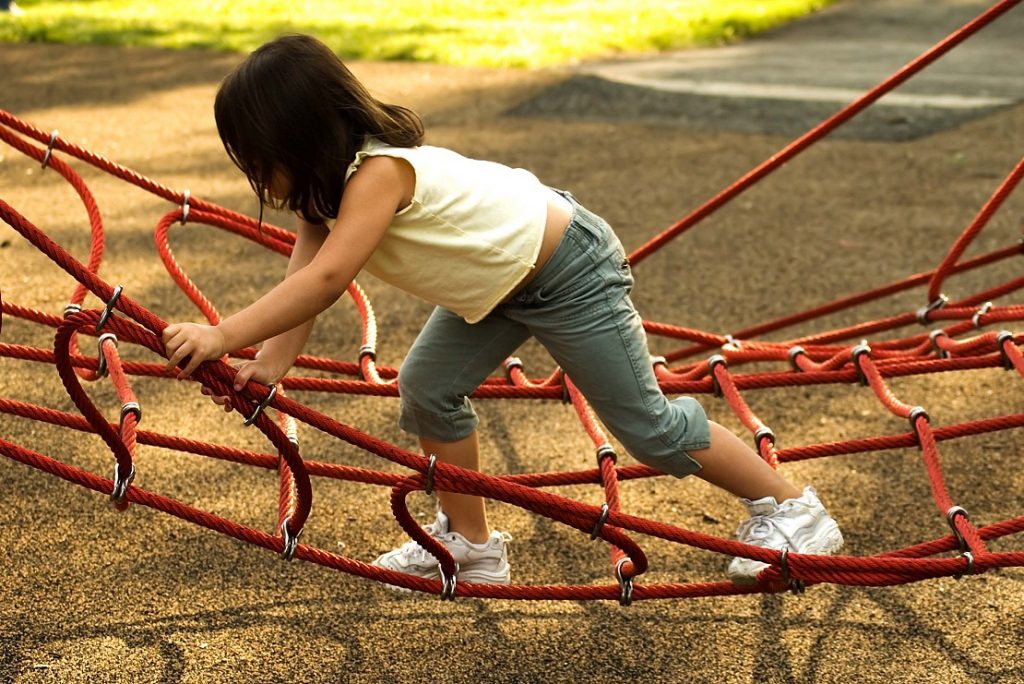
The youngest children like to explore the world around them. In order to better understand it, play should not only take place at home, that is, in safe and already familiar places for the child. Spending time in the garden, on a walk or in a playground will develop his cognitive skills by bringing him into contact with completely new places. In addition,
Small and large motor skills
What is behind these concepts? Small motor skills are closely related to finger and hand dexterity. When grasping toys, a child learns how to do it correctly, so that moving objects is comfortable. This in turn translates into more advanced skills such as buttoning buttons, tying shoelaces independently, holding cutlery, writing or painting. Large motor skills involve the arms, legs, trunk and head. Stimulating these body parts through play improves their functioning, leading to mastery of running, jumping, cycling, among others.
Learning to live in society
Playing with peers is a great way to learn and understand generally accepted social norms. The little one learns what cooperation is all about, as well as healthy competition. He perceives that one should be truthful, empathetic and honest. Playing at home, at school or at the store helps to understand the importance of different social roles. This also shapes the learning of cause-and-effect relationships of actions taken.
The important importance of making new contacts should not be overlooked. By interacting with others, the child overcomes his shyness, builds new bonds and learns the relationships that exist in human relations. When the child assimilates the rules of society, he will be able to judge for himself what is wrong and what is right. Not only will he adapt to the world around him, but most importantly, he will begin to develop his own personality.
Thus, play is a key element in a child’s development, both physically and mentally. It provides new experiences, emotions and relationships, which are extremely important in growing up. So let’s organize children’s time so that there is as much room as possible to explore the world!