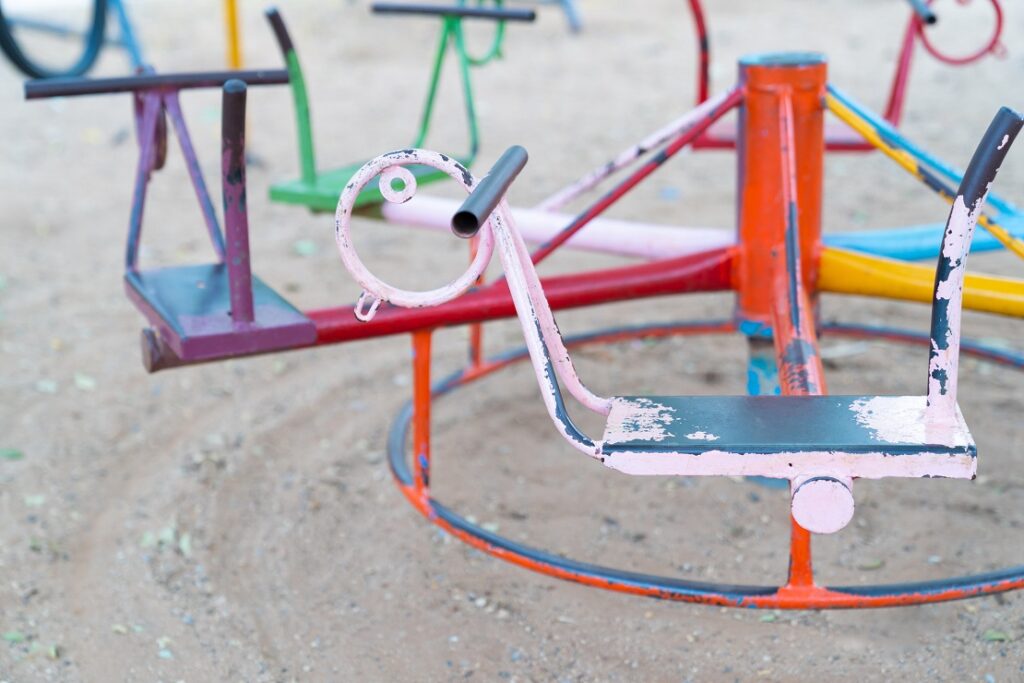
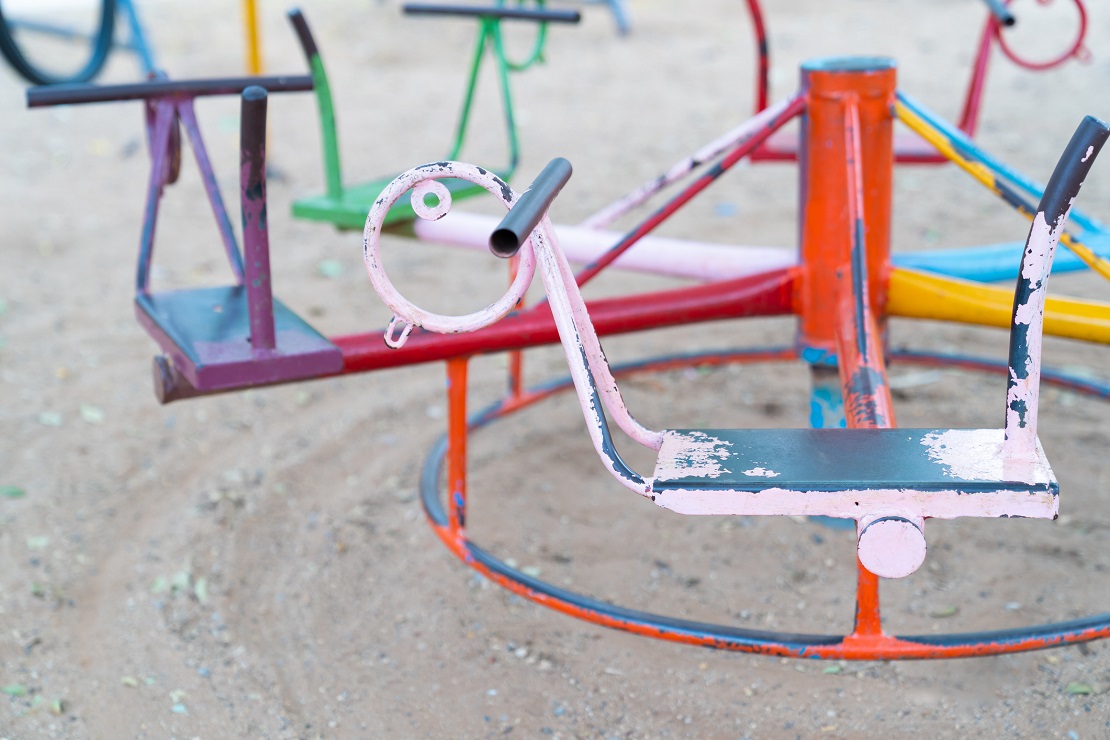
The large number of playgrounds that are part of the infrastructure of cities and villages seems to us nowadays something completely obvious. The well-being of children is a key concern for almost everyone, so it’s no surprise that places are being built that allow them to play in comfortable and, above all, safe conditions. Approved equipment, materials that minimize the risk of hurting oneself and ubiquitous colors are obvious elements of any playground. But has it always been this way, and what is the history of the playground?
For centuries, people have strived to make the space that surrounded them as welcoming as possible. It’s no surprise, then, that from the earliest times both private homes and public gardens were organized as places for entertainment and recreation. Initially, however, it did not occur to anyone that they were intended only for children. The situation slowly began to change in the 19th century, when efforts were made to create safe play areas intended for the youngest. Thus, the first municipal playground was established in Nuremberg in 1876. If, on the other hand, we consider documented sites of this type, the history of the playground should be started in 1877 in Birmingham. The United States lagged about 10 years behind Europe, for there the first playground was opened in 1885 in Boston. However, there is no absolute certainty about this, as some sources date the event to 1887, placing it in San Francisco.
In Poland, on the other hand, the first Jordan Park was opened in 1889. It took care not only of the latest play equipment, but also of laying out alleys, creating playing fields and even planting some 100,000 trees and shrubs. Thus, the place probably became the world’s first park created with children and young people in mind.
Almost 150 years have passed since the first children’s playgrounds were built. Today’s playgrounds in no way resemble their predecessors, but the most important thing is that both in the past and today they bring smiles to the faces of the youngest.