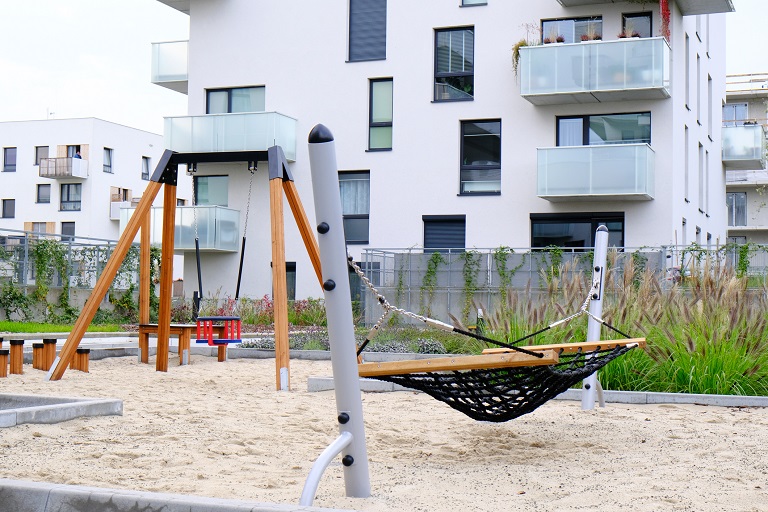
Since time immemorial, man has tried to develop the space around him in such a way that it is not only functional, but also pretty. This is due to the natural desire to increase the comfort of life, as well as to surround oneself with what is beautiful. In order to meet this task, houses and various types of buildings are built, but also objects of small architecture. What does this concept mean?
The term small architecture appears in the Law on Construction (Journal of Laws of 2020, item 1333).
According to this law, small architecture should be understood as small objects, in particular:
a) religious worship, such as: chapels, wayside crosses , statues ,
b) statues, water features and other objects of garden architecture,
c) utilitarian objects for daily recreation and maintenance, such as: sandboxes, swings, ladders, trash cans.
Mostly, therefore, these are objects that have the task of decorating home gardens, as well as maintaining order in public spaces and creating recreational areas in them. The law lists only some objects of this type, but this classification is not closed. Thus, small architecture objects will also include ponds, statues and brick garden grills, and in urban spaces benches, bicycle racks or outdoor gyms, which have become extremely popular in recent years.
Does small architecture require a permit?
Small architecture can be located on private property, as well as in public spaces. In the first case, no permit is required. As for the development of public places with objects of small architecture, it requires notification of the planned project to the department of architecture. In it, the scope and type of planned work must be described in detail. The investor must also submit documents proving the possibility of disposing of the land in question, as well as a project for its development. The waiting time for approval is about a month, and if there are no contraindications, construction can begin.