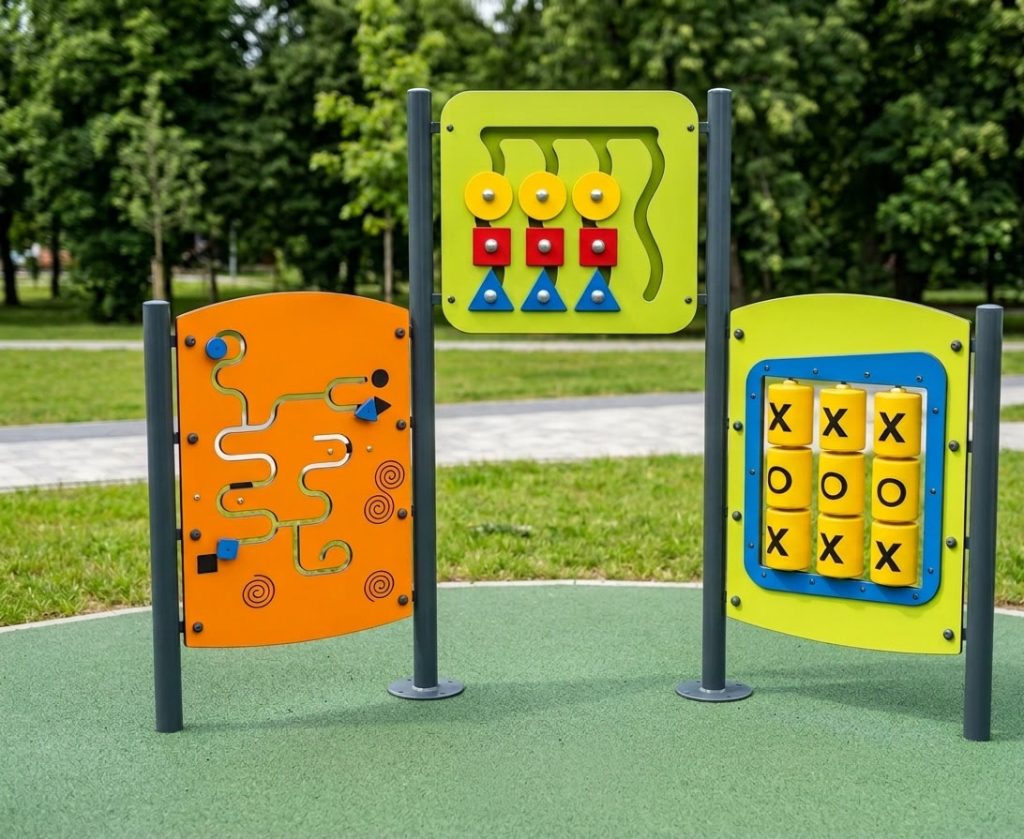
Educational boards on the playground can transform an ordinary recreational area into a hub for learning and development. Thanks to them, children have the chance to gain knowledge through play, which makes these spaces more versatile and engaging. Proper design of such boards requires taking into account not only educational needs but also safety aspects and material durability. The boards must be positioned in a way that encourages interaction and stimulates children’s creativity, and their location should foster both individual discoveries and group play. Well-planned educational boards are today one of the essential elements that create a modern, educational playground.
Why are educational boards more than just an addition to the playground?
Educational boards on the playground are more than just decoration – they provide real support for children’s development and education. Thanks to them, children can play and learn at the same time, which significantly enriches the time spent outdoors.
In addition to physical movement, they develop cognitive, emotional, and social skills. It is this combination of activity and knowledge that makes learning through outdoor play so effective.
Thanks to the boards, children:
- learn through interactive games,
- develop manual skills and motor coordination,
- release tension and excess energy,
- stimulate their senses and perception,
- improve reflexes and reaction speed.
The boards also play an important social role. Group play forces cooperation, communication, and sharing space. Children learn to interact and find it easier to build relationships with their peers. This makes the playground a place of development not only physically but also cognitively and socially.
Types of educational boards and their practical application
Educational boards on playgrounds take various forms, and each of them supports a different area of a child’s development. Counting, alphabet, or logic puzzle boards are excellent for supporting mathematical and language skill development. They help children recognize numbers and letters faster. Magnetic and erasable boards allow for free drawing and writing, which develops creativity and manual skills.
In practice, wall-mounted playground games:
- support learning to count and read,
- develop logical thinking,
- engage children sensorially,
- adapt to different age groups.
Nature boards introduce children to the world of nature, while math boards teach the basics of logic and geometry through play. Educational panels for children, which engage the senses and support development at an early stage of life, are also particularly valuable.
During play, children discover solutions on their own, which builds their self-confidence and curiosity about the world.
How do educational boards influence child development?
Educational boards on the playground provide real support for a child’s development, offering various stimuli for learning through outdoor play.
Above all, such interactive solutions develop cognitive skills – they support logical thinking, concentration, and problem-solving abilities. Children playing at the boards strengthen their memory and learn a creative approach to challenges, which positively influences their intellectual development.
Their influence on physical development cannot be overlooked. Play involving boards engages movement, exercises manual skills, coordination, and general fitness. Thanks to this, children learn in a natural way – by doing.
Sensory development also plays a major role. Boards help to recognize different textures, colors, and shapes, and stimulate the sense of touch and sight. Some solutions also engage sound, which further enriches the sensory experience.
It is also worth noting the social aspect. Play at the boards often takes place in groups, which fosters cooperation, communication, and relationship-building. Children learn teamwork from an early age.
What should you look for when choosing educational boards?
When choosing educational boards for a playground, it is worth primarily matching them to the age and capabilities of the children. For younger children, simple, colorful forms at an appropriate height work best. Older children are more willing to use more complex solutions, such as interactive wall-mounted playground games that engage logical thinking and creativity.
What to pay attention to:
- Materials – weather-resistant and safe (no toxic substances),
- Safety – smooth edges and solid construction,
- Subject matter – varied activities (language, logic, nature),
- Appearance – attractive form that catches children’s attention,
- Maintenance – ease of cleaning and durability.
Proper installation is also important. Boards should be installed in accordance with safety standards to ensure stability and comfort of use.
Designing and arranging boards on the playground
Educational boards work best when they are well-designed and properly arranged. They should be accessible to all children – regardless of age – and mounted at a height that allows everyone to use them freely. It is also worth ensuring they are protected from excessive sun and wind, which will increase comfort and durability.
A good solution is creating thematic zones. For example:
- nature boards near greenery,
- math boards near physical activity areas.
This approach allows for combining movement with learning and enhances the educational effect. It is equally important that the boards do not limit the freedom of movement. Children should be able to move freely between zones and use various elements of the playground. A well-designed space fosters both individual and group play. It facilitates solving tasks together and developing social competence.
The consistent integration of boards with other playground elements creates a functional and attractive space that truly supports children’s development.
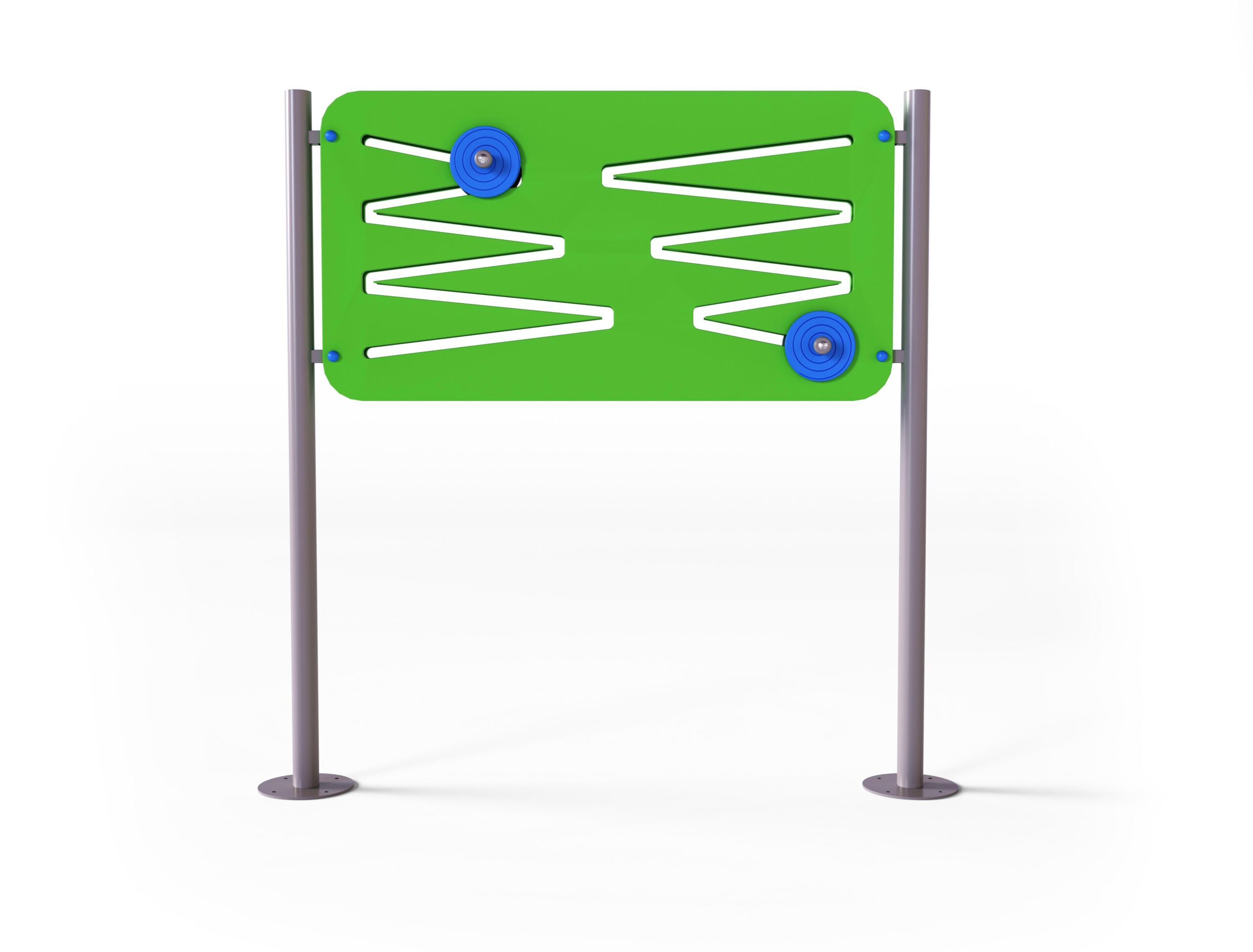
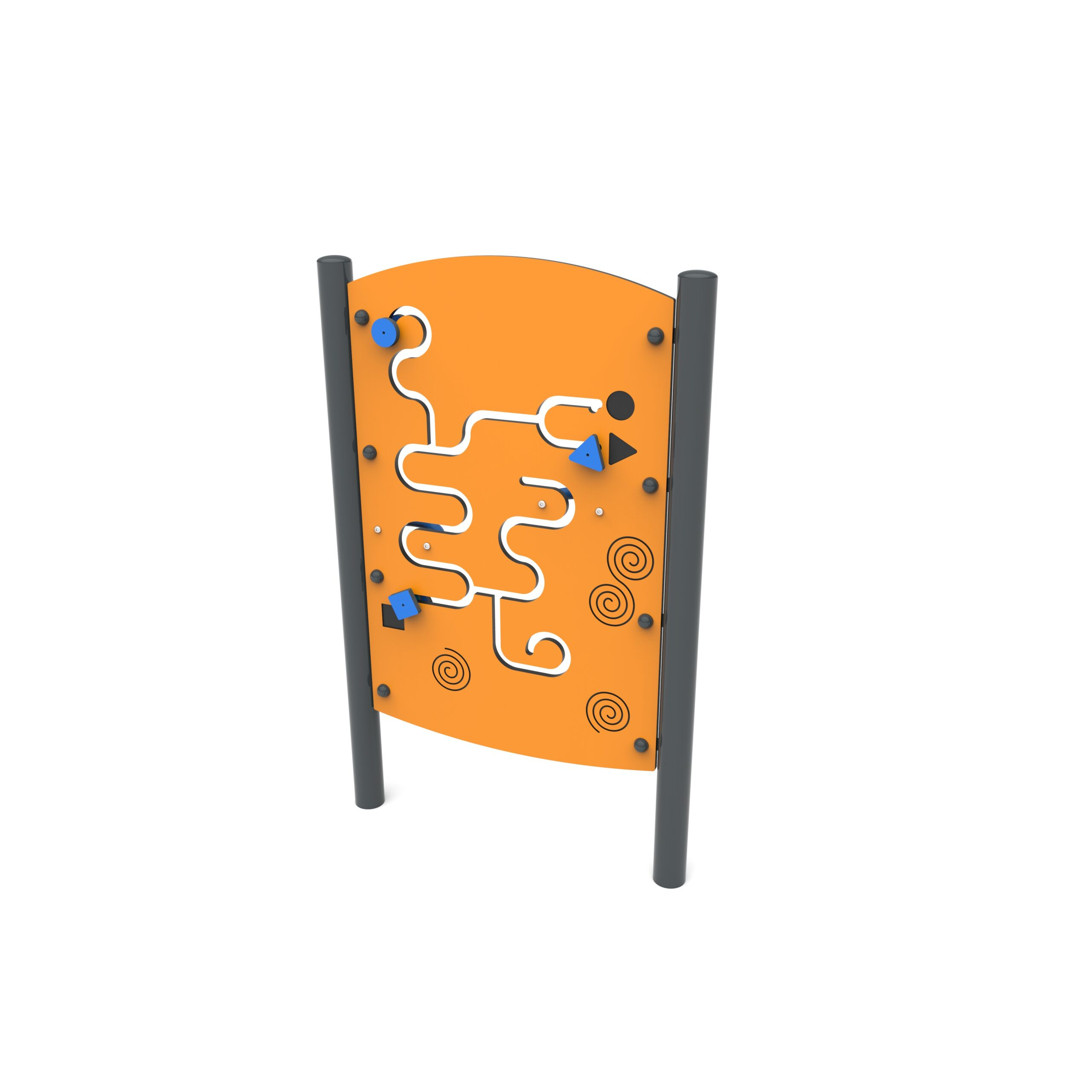
How to create an educational playground tailored to children’s needs?
Designing an educational playground that truly supports children’s development requires considering several important aspects.
Firstly – safety. This is fundamental, so all equipment must meet current standards. Matching the space to different age groups is equally essential. Younger children need simple and intuitive forms of play, while older ones are more eager to engage in more complex activities.
A well-designed educational playground should include various activity zones – sensory, logical, and creative.
The main elements of such a space are:
- educational toys supporting learning through play,
- interactive games developing logical thinking,
- elements such as mirrors, boards, and labyrinths,
- durable materials resistant to weather conditions,
- accessibility for children with different abilities.
It is important that all elements are solid and adapted to intensive use. This will ensure the playground functions safely for a long time. Inclusivity is also of great importance – a well-designed space allows every child to find something for themselves and actively participate in play.
It is worth collaborating with designers and specialists who understand children’s needs and can translate them into functional solutions. Regular inspection of equipment condition and observation of how the playground is used allow for its further improvement and adaptation to users.
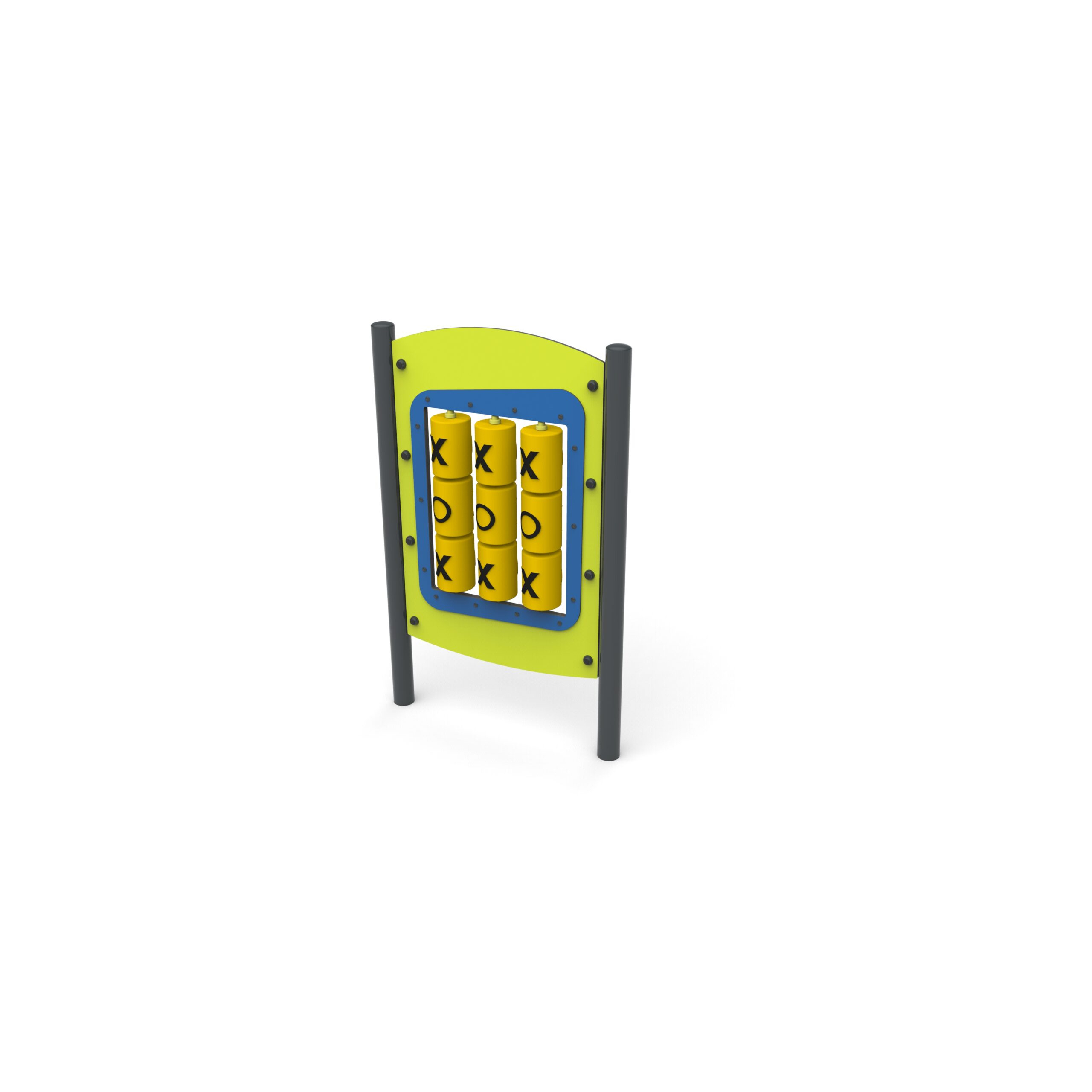
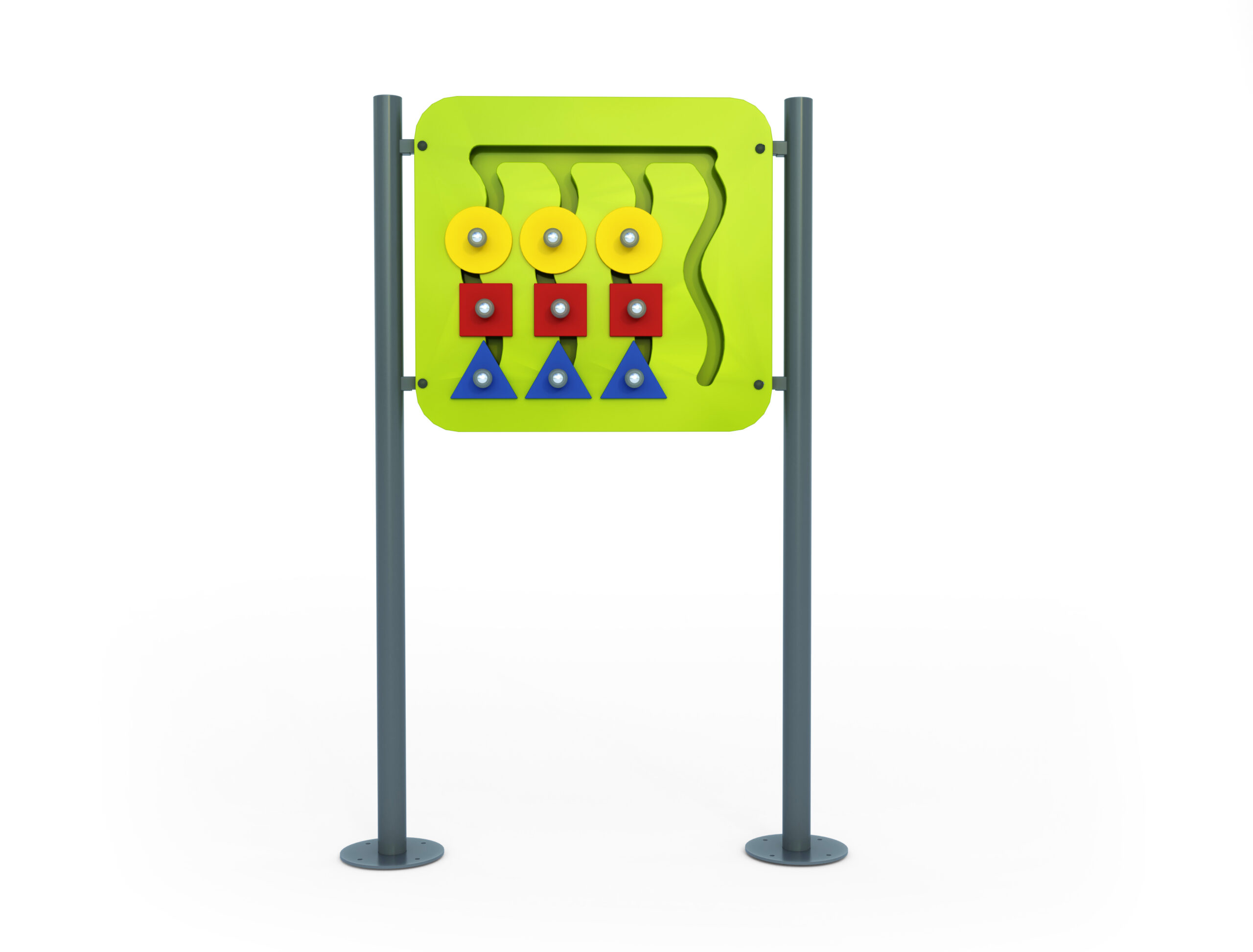
Create a space that truly teaches and engages
If you care about a modern approach to design, focus on solutions that combine play with education.
The Mini-City series is an example of a space where children learn through role-playing, interaction, and movement. Such elements perfectly complement classic boards and create a coherent, engaging playground.
Check out the available solutions and see how to create a place that helps children develop every day.