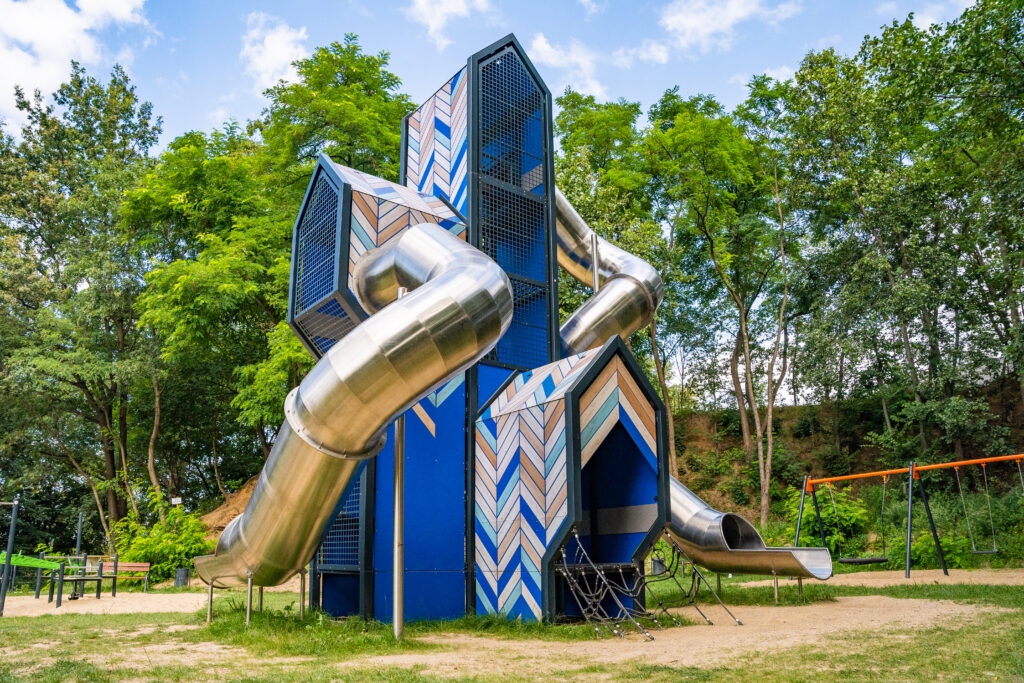
A public playground, park or residential recreation area is used by many people almost all year round. During the summer holidays and on warm evenings, these places stay busy for longer, and their equipment is used more intensively. Under such conditions, both natural wear and tear and the effects of improper use or deliberate damage become apparent sooner. There is no material that cannot be damaged. However, a space can be designed to make vandalism more difficult, limit its consequences and reduce the need for costly repairs.
How to protect a playground from damage and vandalism?
Protecting a playground should not start only after the first act of vandalism. The best results come from taking the risk of damage into account at the design stage. The investor should analyze the location, expected foot traffic, visibility of individual zones and the possibility of carrying out regular inspections.
Play equipment and urban furniture should be selected with the installation site in mind. Solutions that work on the enclosed grounds of a preschool may not be suitable for an open park that residents also use after dark. In publicly accessible spaces, what matters most is material durability, a limited number of easily accessible joints and stable anchoring of structures.
The risk of damage can be reduced by:
- ensuring good visibility of the playground from footpaths and neighboring buildings,
- avoiding hidden corners out of caregivers’ sight,
- securely fixing play equipment and urban furniture,
- carrying out regular inspections and promptly repairing any defects noticed.
A neglected place can give the impression that nobody is looking after it. When minor damage, graffiti or loose parts are left unattended, further damage may be harder and more expensive to repair. That is why materials and construction are only part of a broader system for protecting shared property.
Safety and durability
4 pillars of a vandal-resistant recreation area
How to combine aesthetics with resistance to intensive use
Hot-dip galvanized steel and thick, durable HPL and HDPE panels.
Concrete foundations that prevent the structure from being pulled out or tipped over.
A design that eliminates dark corners and supports natural surveillance.
Removing minor damage or graffiti quickly reduces the risk of further vandalism.
Safety backed by standards
FreeKids urban furniture and play equipment are subject to the strict requirements of the EN 1176 standard. Every structure is designed for trouble-free use in public spaces.
Which materials are resistant to vandalism?
In public spaces, the best-performing materials are those resistant to moisture, UV radiation, temperature changes, corrosion and frequent cleaning. They should also withstand intensive use and point impacts. This does not mean, however, that every element made of metal or plastic is automatically vandal-resistant.
Resistance also depends on material thickness, the joining method, the quality of surface protection and correct installation. Thin sheet metal screwed on in an easily accessible spot can be bent much faster than a steel element set in a rigid frame.
Playgrounds and urban recreation areas are often equipped with elements made of galvanized steel, stainless steel, HPL or HDPE panels, composites and properly protected wood. The durability of urban furniture depends largely on the use of corrosion-protected steel and wood properly adapted to changing outdoor conditions.
Galvanized steel and anti-corrosion protection
Steel is often chosen for load-bearing structures, benches, tables, trash cans and boards. It allows for stable elements with relatively simple shapes that are difficult to pull out, tip over or deform without tools.
Steel itself, however, needs protection against corrosion. One common method is galvanizing, in which the surface is coated with a layer of zinc. Powder coating can provide additional protection and a color finish. The durability of an element also depends on proper surface preparation, protection of joints and limiting spaces where water can collect.
For equipment installed in the ground, the protection of the parts near ground level is particularly important. This is where the structure stays in contact with moisture, mud, salt and dirt. Regular visual checks make it possible to spot chipped coating or early signs of corrosion before the damage begins to affect the stability of the element.
HPL and plastics used on playgrounds
HPL panels are used in outdoor equipment because of their hard, dense surface and low water absorption. They can be used for panels, tabletops, seats, walls and decorative elements. Well-chosen panels reduce the problem of peeling paint, which can occur on surfaces that need regular refinishing.
Playgrounds also use HDPE panels, polycarbonate, polypropylene and other plastics selected for the function of a given piece of equipment. Plastics, however, are not resistant to every kind of damage. They can be scratched, burned or permanently stained. Their advantages often include easier cleaning, no corrosion and the option of making an element in a single, uniform color.
Durable park benches and picnic tables
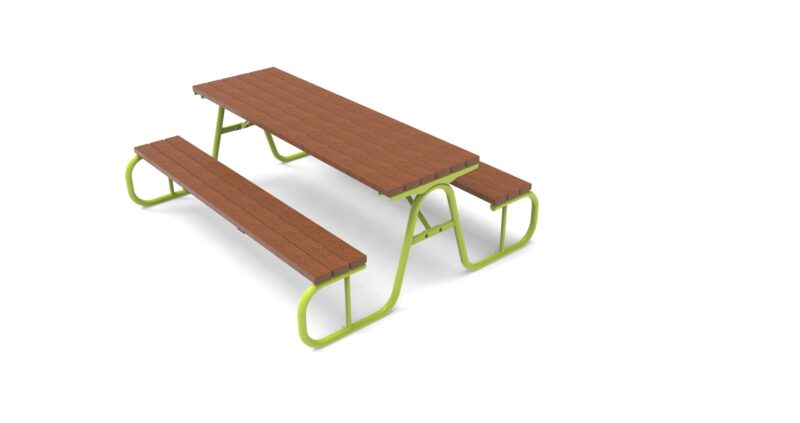
Seating areas are used intensively by children, parents, teenagers and passers-by. For this reason, benches and picnic tables should be stable, easy to clean and free of fragile parts that can easily be broken off.
In spaces particularly exposed to damage, structures based on a steel frame permanently fixed to the ground work well. Seats and tabletops can be made of steel, composite, protected wood or other materials designed for outdoor use. When choosing picnic tables for public spaces, it is worth paying attention to galvanized steel, composites, stability and ease of maintenance.
Proper placement can also help protect the playground. Furniture positioned with a view of the play equipment encourages caregivers to stay within the play area. However, it should not create sheltered corners or be placed within the impact areas of play equipment.
Trash cans built for intensive use
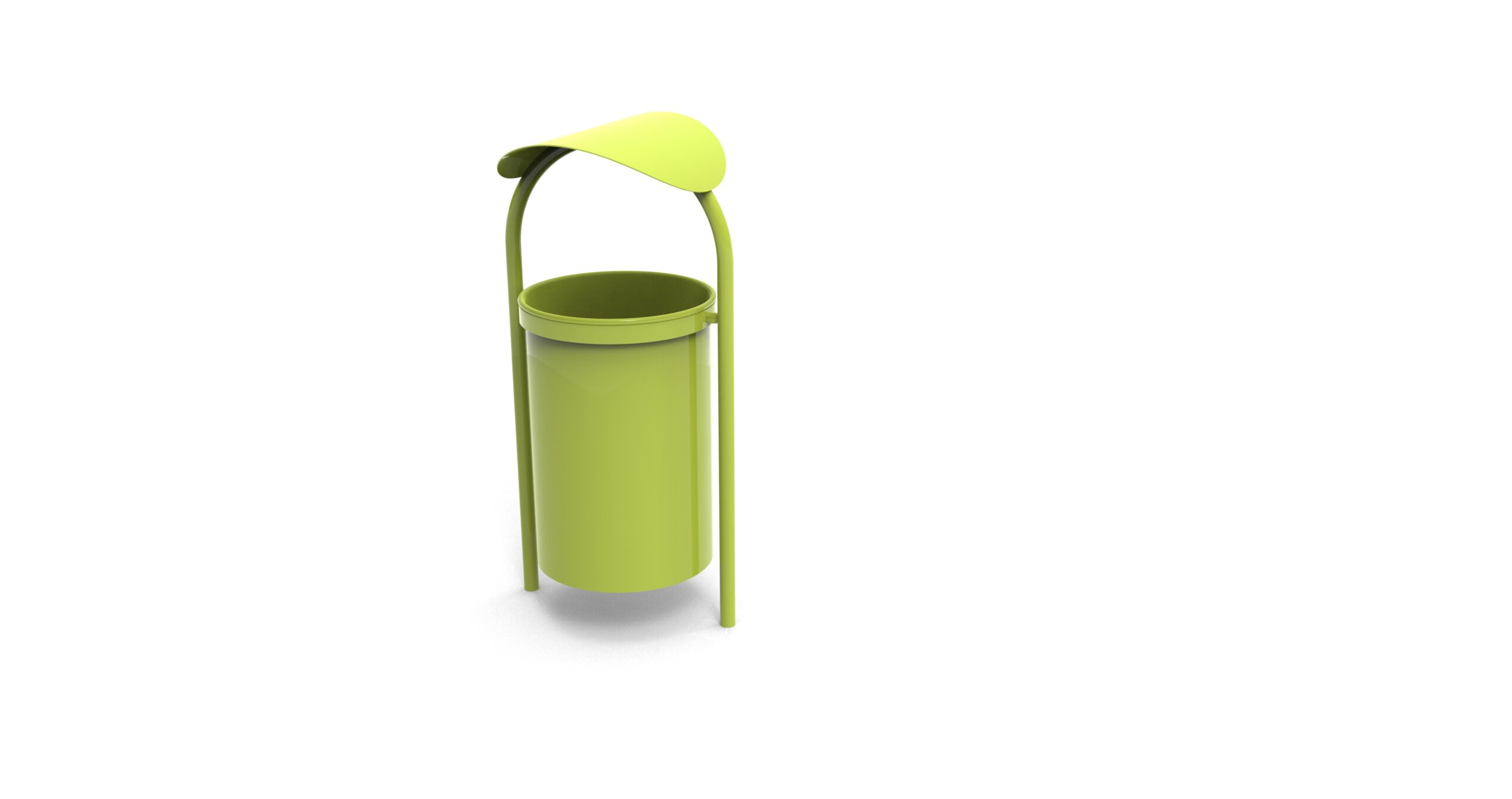
A lack of trash cans, or poor placement, quickly affects the look of the whole area. Discarded packaging, bottles and food scraps make it harder to keep the area tidy, and broken glass left behind can pose a direct hazard to users. A trash can for a public park should have a stable structure, be weather-resistant and be easy to empty. It is also important to secure the liner against accidental removal or tipping. Depending on the location, a covered opening or a design that restricts access to the contents may be useful.
At FreeKids, we offer trash cans designed for outdoor spaces, with a focus on weather resistance and ease of maintenance. They can be visually matched to benches, tables and other equipment in the area. Trash cans should be placed near entrances, rest areas and main walkways, but outside impact areas and children’s movement routes. Their number must reflect the size of the playground and how often they are actually emptied.
Information boards — are they worth it?
Information boards will not prevent deliberate damage to equipment, but they set out the rules for using the playground and make it easier for users to report problems. They should include, among other things, the manager’s contact details, an emergency number, information on the intended use of the facility and the most important rules of use.
Clear information can reduce behavior that results from a lack of awareness, such as using equipment in ways it was not designed for, riding vehicles onto the impact-absorbing surface or leaving the gate open. It is also worth stating how to report a fault or any damage noticed.
In theory, an information board may have a deterrent effect, but against someone set on deliberate vandalism it is more of a symbolic measure than a real safeguard. If someone wants to destroy property, the mere presence of a board with warnings or a CCTV notice rarely stops them.
Do CCTV and lighting protect a playground from vandalism?
Materials can be complemented by solutions that improve visibility and social control of the space. Well-planned lighting reduces dark corners, and locating the playground along a busy route increases the chance that inappropriate behavior will be noticed quickly.
CCTV can be helpful in places where vandalism keeps recurring, but it should be designed in line with data protection requirements. It does not replace the regular presence of the manager, technical inspections or an efficient system for reporting faults.
The legibility of the space also matters. Low planting around the equipment, well-placed lights and the absence of tall, opaque barriers allow the playground to be observed from several sides. At the same time, lighting should not encourage use of the equipment during hours when the facility is officially closed.
Regular inspections reduce repair costs
Durable materials do not release the manager from the obligation to check the condition of the equipment. Even a slightly loose bolt, a damaged coating or a cracked panel can get worse with continued use and exposure to the weather.
The EN 1176 series of standards also includes guidelines on the installation, inspection, maintenance and operation of playground equipment. Inspections should cover, among other things, signs of deliberate damage, missing parts, sharp edges, the condition of foundations, corrosion and damage to the surfacing.
A quick response makes it possible to fix a minor defect before a larger part of the structure needs to be replaced. If the damage poses a hazard, the piece of equipment concerned should be taken out of use until the problem has been fixed.
Want to learn more about the scope of inspections and maintenance? Read also: How to properly maintain a public playground.
The resistance of a playground or urban recreation area does not depend on a single material. What is needed is a combination of solid structures, anti-corrosion protection, secure installation, good visibility and regular inspections.
Steel trash cans, stable picnic tables and clear information boards help keep the area tidy and organize how the space is used. HPL, HDPE and other plastic panels can reduce how often surfaces need refinishing, while properly protected steel performs well in structural elements.
The goal should not be to create a place that is completely immune to damage, because no material can guarantee that. A well-designed space, however, makes vandalism harder, simplifies repairs and keeps equipment functional for longer. This translates into lower maintenance costs and greater comfort for the residents who share the space.
Looking for durable solutions for public spaces?
Planning a damage-resistant playground and durable urban furniture requires certified materials and proven installation systems. Get in touch with us – we will help you choose vandal-resistant picnic tables, trash cans and safe, standard-compliant play equipment.