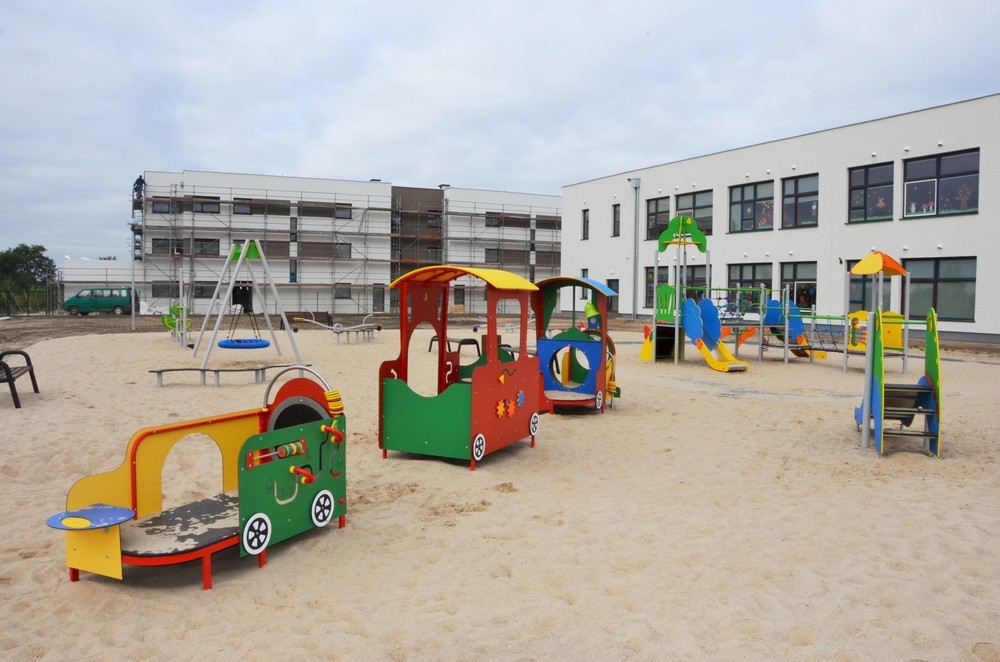
August in schools and kindergartens means preparing classrooms, sports fields, green grounds, and all facilities for the children’s return. It is also an ideal moment to take a close look at the playground. The few remaining weeks of the summer holidays provide an opportunity to carry out an inspection, repair surfacing, refurbish structures, and replace equipment whose continued use is no longer safe or comfortable. A revamp does not always mean building a playground from scratch. Sometimes, the biggest difference comes from replacing a worn-out swing, installing a few spring rockers, clearing and organizing safety zones, or refreshing a sandpit. How should you approach such work before the first school bell rings?
School Playgrounds vs. Regulations and Safety Requirements
Safety must always take precedence over decisions regarding colors, equipment shapes, or the number of play features. The school or educational facility principal is responsible for ensuring safe and hygienic conditions for students. Regulations also stipulate that schools and preschool facilities must purchase equipment that holds the appropriate approvals or certificates.
When it comes to playground equipment, the primary benchmarks remain the standards from the PN-EN 1176 series (governing playground equipment and surfacing) and PN-EN 1177 (relating to impact-attenuating playground surfacing). The Office of Competition and Consumer Protection (UOKiK) recommends that suppliers provide, among other things, installation and operation manuals, specifications regarding safety clearances, and documentation certifying the equipment’s compliance with relevant standards. In practice, regulations concerning school playgrounds must be evaluated alongside technical requirements, equipment documentation, and the legal obligation to keep the entire area in a safe operational state.
Prior to the start of the academic year, it is essential to inspect more than just the equipment itself. Safety surfacing, fencing, access gates, pedestrian pathways, foundations, moving parts, and clear zones around each structure all require scrutiny. The General Office of Building Control (GUNB) highlights that property owners and site managers are legally required to maintain playground equipment in proper technical order and immediately rectify any identified hazards.
How to Refresh a Playground Before the School Year Begins?
The best approach is to start with a thorough visual inspection of the entire grounds. This goes far beyond aesthetics. You must verify structural stability, the condition of joints, fasteners, seats, chains, springs, handrails, as well as wooden and metal components. Safety surfacing within fall zones demands dedicated attention.
If a piece of equipment shows signs of heavy wear and tear, a simple coat of fresh paint will not solve the issue. Before the school year starts, it is best to divide the required maintenance into three categories: components suitable for routine servicing, equipment requiring structural repair, and items that need full replacement.
This allows budgets to be allocated where improvements will genuinely enhance safety and functionality. Want to learn more? Check out our article: How to prepare a playground for the new season.
New Swings as a Quick Way to Upgrade Your Playground
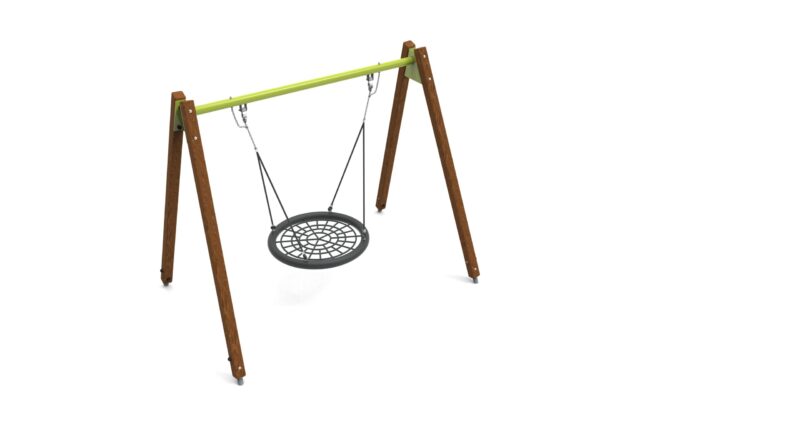
Swings are among the most heavily utilized playground units, which is why August inspections should pay special attention to their condition. Structural stability, post anchoring, seats, and articulated suspension hardware are all critical.
If existing equipment requires replacement, installing new playground swings suited to the students’ age group and the current layout is an effective solution. FreeKids offers both wooden and steel constructions, single-bay, double-bay models, and bird’s nest (basket) swing variants.
When purchasing, look beyond visual appeal alone. Certified children’s swings backed by documentation confirming standard compliance must also be chosen with consideration for required safety impact zones, foundation methods, and the type of surfacing beneath them. Swapping out an old swing can be a relatively minor intervention that delivers a major aesthetic and functional refresh without redeveloping the entire recreation area.
Spring Rockers in Early Years and Preschool Play Zones
Spring rockers are an excellent fit for kindergartens, nursery classes, and play areas dedicated to younger pupils. They have a compact footprint, making it easy to activate underutilized pockets of space or complement existing play setups.
Spring rockers for children come in a wide variety of shapes and themes. Spring-mounted models allow you to create multiple compact activity points without having to install bulky, sprawling structures.
When choosing spring rockers, the manufacturer’s credentials matter. Always verify the equipment documentation, foundation details, target user age group, and free space clearances around the structure. An attractive shape alone should not be the deciding factor. Such upgrades are particularly effective when the goal is to increase play capacity and eliminate queues for popular attractions.

Sandpits Require Dedicated Post-Holiday Inspection
A sandpit may look fine from the outside, yet still require remediation before school resumes. Inspect the condition of edging borders, corner seats, timber or metal elements, and the sand itself. It is also worthwhile to assess whether the structure still provides comfortable and safe conditions for children’s play.
If an existing sandpit is badly degraded, modernizing the area may involve replacing it entirely. FreeKids playground sandpits are available in multiple configurations, supported by sand play accessories, protective covers, and shade canopies. The manufacturer also offers specialized solutions designed for educational spaces, kindergartens, and nurseries.
It pays to treat the sandpit as a full-fledged activity hub rather than just a frame filled with sand. Adding sand transport, sieving, and tactile play elements enriches sensory play without eating up additional valuable playground surface area.
Playground Checklist Before the First School Bell
Prior to reopening the space to children, it is best to go through a practical verification checklist:
- check the stability and overall structural condition of all equipment;
- inspect bolts, fasteners, chains, springs, and other moving or articulated parts;
- examine timber components for splintering, cracks, rot, and surface wear;
- evaluate the condition of metal elements and protective anti-corrosion coatings;
- inspect surfacing and top up loose-fill shock-absorbing materials wherever levels are depleted;
- clear all obstacles and debris situated within equipment impact/safety zones;
- inspect perimeter fencing, self-closing gates, benches, litter bins, and pedestrian walkways;
- assess the condition of the sandpit, borders, covers, and accessories;
- schedule immediate repairs or replacements for any compromised equipment;
- ensure all maintenance, inspection, and new equipment compliance records are fully up to date.
Safe Return to School and Kindergarten
4 key verification areas before the first school bell
Tightening loosened fixings, inspecting swing chain wear, bearings, and moving parts.
Checking timber surfaces for splinters or rot, and assessing the integrity of anti-corrosion coatings.
Leveling and topping up loose-fill surfacing (sand, bark, gravel) or inspecting synthetic wet-pour/tiles.
Replacing sand fill in accordance with sanitary guidelines and checking side seating ledges.
Every piece of equipment installed on the grounds of a public school or kindergarten must strictly comply with the safety requirements of the PN-EN 1176 series. Technical documentation and certificates form the legal basis for facility sign-off before students return.
Consumer protection authorities (UOKiK) advocate systematic playground inspections, meticulous logging of all maintenance and repairs, and conducting an independent annual main inspection. The frequency of routine visual checks should always reflect the intensity of site usage.
An August inspection is a prime opportunity not only to fix defects, but also to appraise the playground through the eyes of children returning to school or preschool. Sometimes, basic maintenance and topping up surfacing material are all that is required. In other facilities, the best solution will be swapping out a single failing unit or introducing several fresh play features.
Crucially, any modernizing upgrades should stem from an objective assessment of the space, the users’ age profiles, and statutory safety mandates. Swings, springers, or an upgraded sandpit can fundamentally transform the play dynamic without needing to start investment from scratch. At FreeKids, we design and manufacture commercial playground equipment; when planning school or preschool upgrades, our products can be precisely matched to available footprints, the character of the existing zone, and the needs of distinct age groups.
Planning to Upgrade or Modernize a School Playground?
Replacing individual worn-out items with certified swings, spring rockers, or safe sandpits is a fast and cost-effective way to refresh a recreational zone before students return. Get in touch with our team—we will help you select compliant, certified equipment and plan required safety clearance zones.